The progressive mountain village
Foreign voting rights in Vals
Voting rights for foreign nationals would be approved again today.
Reto Jörger Municipal Clerk, Vals
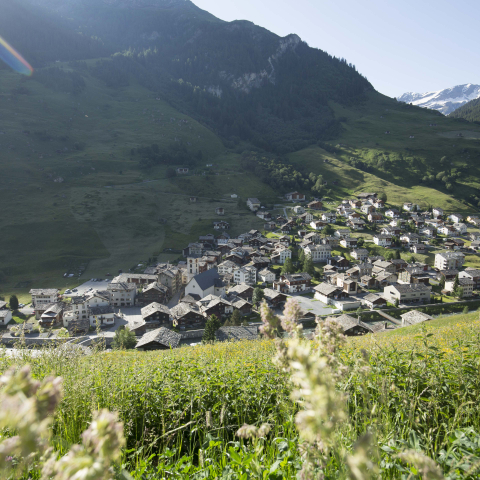
At eleven in the morning, Vals is quiet. A few hikers are stocking up for a picnic at Volg. A man studies the notices covering a garage door without getting off his bike. A woman walks four freshly shorn llamas. Foreign nationals have been able to have a say in municipal affairs here since 2012. While voting rights for foreign nationals have long existed at municipal level in many French-speaking cantons, and even at cantonal level in two, only a handful of municipalities in Graubünden, Appenzell Ausserrhoden and Basel-Stadt have taken this step in German-speaking Switzerland.
The woman at Peng bakery remembers the vote on voting rights for foreign nationals. It was never a major issue, she says, either before or after the municipal assembly. But she has a theory about why people in Vals are open to foreign nationals: “We know what it’s like. There aren’t that many jobs in a small village like this. In the 1950s especially, many people had to go elsewhere to work. So we know how it feels to be an outsider, and perhaps that makes us more understanding.” Reto Jörger, the Municipal Clerk, thinks the theory is plausible. But let’s start at the beginning.
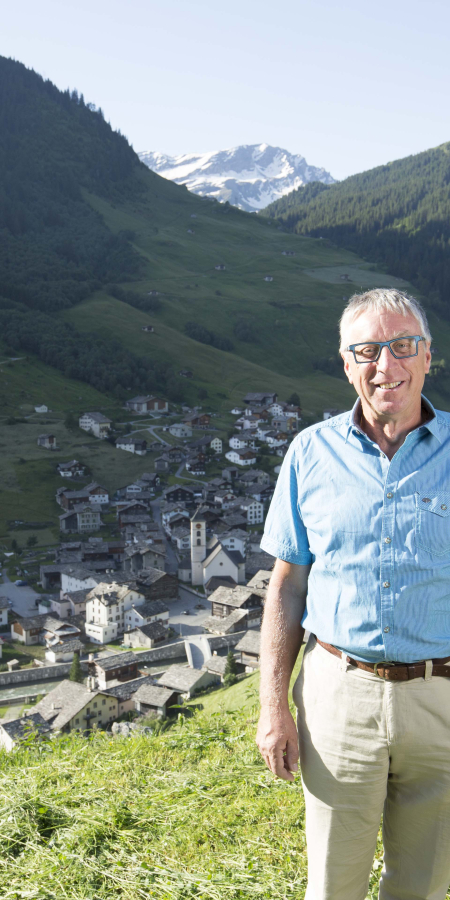
Mr Jörger, how did Vals come to vote on voting rights for foreign nationals?
We needed to revise the municipal constitution in full. During that process, the idea arose of introducing voting rights for foreign nationals at the same time. We discussed it and concluded that it would be an important step towards integration. So we included it in the constitutional revision.
Do you think all eligible voters were aware of this provision?
Yes, of course. It was always explicitly mentioned in the explanatory report for the municipal assembly and in the voting documents. I don’t think an attentive voter could have missed it. It is also important to be precise: only foreign nationals with a permanent residence permit who have lived here for at least ten years are entitled to vote.
People in Vals are fundamentally very open and tolerant.
Reto Jörger Municipal Clerk, Vals
How many foreign nationals live in Vals, and how many are eligible to vote?
We have 987 residents, of whom 199 are foreign nationals. Around 30 of them are eligible to vote.
Do they make use of this opportunity to have a say?
Well, we don’t keep statistics, of course, as that would raise concerns about ballot secrecy. But decisions here are generally made at the municipal assembly, so we can get a rough idea. I would say participation among foreign nationals is slightly lower than among Swiss citizens, mainly because of the language barrier. It also depends on how closely the issue being voted on relates to residents’ everyday lives. When it concerns tourism, more people naturally take part if they work in the sector and are directly or indirectly affected by the outcome. Those tend to be Germans and Austrians.
Are people in Vals keen to take part in votes?
Yes. I would say that, on average, more than 100 residents attend the municipal assembly, which is quite a lot. For particularly contentious issues, attendance can reach 250.
Would you say foreign residents in Vals are well integrated?
We have hardly any problems. People in Vals are fundamentally very open and tolerant. Applications for Swiss citizenship have always been approached positively, too.


