
Bündnerfleisch
The ultimate FAQ
Everything you have always wanted to know about Bündnerfleisch
What exactly is Bündnerfleisch?
Bündnerfleisch is not ordinary dried meat, but a premium product from the mountains of Graubünden. It is made exclusively from the finest beef and in accordance with strict specifications. Only producers with proven expertise in meat processing who comply with the rigorous product specification of the Bündner Fleischfabrikanten Association (VBF) may call their air-dried beef Bündnerfleisch.
How is Bündnerfleisch made?
Bündnerfleisch is made from the finest cuts of beef: the thigh muscles. The meat is trimmed of fat and sinew, rubbed with salt and spices, and stored at low temperatures. The cuts are then hung for several weeks to dry at altitude in Graubünden. After a few weeks, the meat is pressed and dried again for several more weeks in the natural climate.
What exactly happens while the meat is drying?
For air-dried Bündnerfleisch to develop the right texture and perfect flavour, the surrounding climatic conditions must be just right. Graubünden's valleys provide precisely these conditions. As a rule of thumb, the temperature should be 10 to 12°C with relative humidity of around 75%. If the air were too dry, the product would become inedible. Bündnerfleisch has an average water content of around 45%, giving it its distinctive flavour.
Where is Bündnerfleisch produced?
Alongside several large producers, numerous smaller businesses make Bündnerfleisch according to time-honoured traditions – all of them exclusively in the canton of Graubünden. Bündnerfleisch bears a protected geographical indication (PGI), confirming that the product originates exclusively from Graubünden and is produced there. The designation protects the product's quality and reputation, which are closely linked to its geographical origin.
What nutrients does Bündnerfleisch contain?
The result is naturally preserved meat with a high proportion of protein and essential nutrients. On average, 100 grams of Bündnerfleisch contains 40 grams of protein. It also contains vitamins such as B1, B2 and niacin, as well as minerals including iron and various trace elements.
Why does Bündnerfleisch keep you feeling full for so long?
An impressive 40 grams of high-quality protein is packed into 100 grams of Bündnerfleisch. The body takes longer to digest protein than carbohydrates, so the stomach remains full and the feeling of satiety lasts longer. The lengthy drying and maturation process also makes the meat's structure denser, further extending the feeling of fullness. Bündnerfleisch is therefore a premium source of energy – ideal for athletes and active people.
Is Bündnerfleisch high in fat?
With a fat content of just 2% to a maximum of 4%, Bündnerfleisch is considered low in fat. Combined with its high protein content, it keeps you feeling full for a long time without adding too many calories. This makes it an ideal snack between meals or a convenient source of everyday energy.
Where can you buy genuine Bündnerfleisch?
From traditional rural butcher's shops and your favourite local grocery store to the delicatessen counter in a large supermarket, Bündnerfleisch is available from many different outlets. What all of them value is the high quality of their products – and Bündnerfleisch delivers this quality in a unique way.
What is the best way to enjoy Bündnerfleisch?
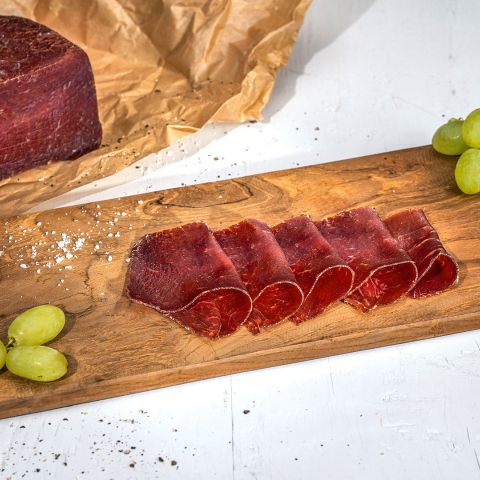
Freshly sliced, Bündnerfleisch reveals its distinctive character. Whether in a sandwich with fine rustic brown bread, served on a platter with gherkins and cheese, or simply eaten by hand, Bündnerfleisch adds a generous helping of enjoyment to everyday life. Be sure to explore our recipe ideas for snacks featuring Bündnerfleisch.
Does Bündnerfleisch put you in a good mood?
Absolutely. The proof is a video featuring former Federal Councillor and President of the Swiss Confederation Hans-Rudolf Merz and probably the most famous fit of laughter ever heard in the Swiss Parliament. It has already attracted more than three million views from around the world – enough to make even TikTok creators envious.
How long has Bündnerfleisch existed?
Bündnerfleisch was first mentioned in writing in the 18th century. In 1793, the German travel writer Johann Gottfried Ebel wrote: “The air is so dry that from Sils down to St. Moritz, from October until March, all meat is dried not in smoke but in the air.”
Why is Bündnerfleisch such an important Swiss tradition?
Until after the Second World War, self-sufficiency was extremely important in rural areas of Switzerland. People depended on laying in supplies for the harsh winter months. After the cattle returned from the Alpine pastures in autumn, part of the herd was slaughtered. It was customary to slaughter older cows that produced less milk. Some of the meat was made into sausages, while the finest cuts were cured and air-dried.
Which spices are used to make Bündnerfleisch?
The well-chilled cuts of meat are trimmed of fat and sinew before being rubbed with a mixture of salt and spices. In addition to pepper, Bündnerfleisch may be seasoned with garlic, ginger, juniper, bay leaf or allspice. The exact blend, however, is one of the producers' best-kept secrets.
How can you recognise genuine Bündnerfleisch?
When shopping, look for the IGP/GGA seal of origin – Indication Géographique Protégée, or protected geographical indication – to make sure you are buying genuine Bündnerfleisch. This seal confirms that the meat was produced in Graubünden using tried-and-tested traditional methods and, of course, that it delivers its unique flavour.
What is the difference between Bündnerfleisch, Mostbröckli and bresaola?
Bündnerfleisch, Mostbröckli and bresaola are all made from beef, but there are clear differences in their origin, production and flavour. Bündnerfleisch and Mostbröckli both come from Switzerland, whereas bresaola originates in Italy. Bündnerfleisch is known for its intense flavour. Mostbröckli is dried for less time and has a mild smoky taste. Bresaola is dried even less and is often served with olive oil and leafy salad. Although all three specialities are air-dried, their spice blends and preparation methods vary. These differences give each delicacy its distinctive character and flavour.